Dunia Innovations is redefining how the world discovers new materials. By closing the “simulation-to-reality” gap, Dunia’s AI-driven autonomous lab, IRIS, fuses robotics, real-world data, and multi-modal learning to accelerate the design of next-generation materials. From energy to chemicals to advanced manufacturing, Dunia is building the discovery engine for a sustainable, abundant future.
CHEManager: Dunia’s tagline is “Bridging the Sim2Real gap in materials discovery.” What does that mean in practice?
Alex Hammer: For decades, materials science has been stuck in slow motion. We now start to have incredible simulations, but very little data to validate them. AI models can simulate thousands of interesting materials candidates, but frankly the only thing that matters is how those materials perform in the real world, at scale, and in actual industrial conditions. Dunia’s platform, IRIS, integrates AI with robotics to simulate, manufacture, stress-test, and analyze materials, learning from physical experiments and then continuously improving predictions and accelerating discovery.
Why is now the right time for this approach?
A. Hammer: The world has never been hungrier for breakthroughs. I mean in areas like clean energy, in sustainable chemicals, advanced manufacturing, etc. But the materials that enable these breakthroughs take decades to develop, and we just can’t afford to wait that long. AI has already transformed fields like protein design; we’re doing the same for materials but grounded in industrial data and automation.
What makes Dunia’s platform different from other AI-for-science efforts?
A. Hammer: Many efforts focus on simulations or digital twins. We focus on reality. Dunia combines real-world experimentation with multi-modal AI, in what we call the “Dunia Flywheel”: a continuous feedback loop powered by autonomous robots that run, test, and learn 24/7. The result is 50× higher throughput, 12× more reproducible data, and learning cycles that are six times faster than traditional labs. But speed isn’t everything. Every experiment we run is designed for manufacturability; grounded in real chemistry, process conditions, and industrial relevance. A “great” material that can’t be produced at scale isn’t really a breakthrough, it’s just an academic exercise.
What types of materials are you working on today?
A. Hammer: We started with catalytic and electrochemical materials, for example, precious-metal-free catalysts for hydrogen production and CO2 conversion. But our platform is general-purpose. The same approach can accelerate discovery in batteries, semiconductors, membranes, and specialty chemicals. In short, anywhere materials limit progress, Dunia can move the needle.
You mention “design for manufacturing.” Why is that important?
A. Hammer: Discovery doesn’t change the world, it’s actual deployment. If a material can’t be scaled, integrated and produced efficiently, it stays stuck in the lab. That’s why IRIS is designed for manufacturability from the start. We test under industrially relevant conditions. This also makes us a preferred partner to OEMs looking to go from concept to production without the decade(s) long lead time.
Dunia already works with major industrial players. Can you share more about that traction?
A. Hammer: Yes! We’ve signed the first contracts with Fortune100 global leaders, and our pipeline exceeds EUR 50 million in MoUs. For example, in October we announced a major collaboration with Valterra Platinum. Customer pull has been overwhelming as AI shapes out to become the key determining factor for future competitiveness in the industry.
What’s Dunia’s long-term vision?
A. Hammer: Our goal is to industrialize scientific discovery itself. To that end, we’re building a global network of autonomous Gigalabs; each operating as an intelligent and autonomous node in a connected global materials discovery ecosystem. Within a few years, we aim to discover a better material every 30 days, across domains from energy to electronics.
In the long run, one moonshot we are targeting is rebuilding one of nature’s most elegant systems: the Artificial Leaf. Photosynthesis took billions of years to perfect; we want to recreate that process in decades. It’s a symbol of what our platform can do: merge biology’s ingenuity with machine precision. Ultimately, we want to make the physical world as programmable as software, accelerating humanity’s path to an abundant, sustainable future.
Alex Hammer
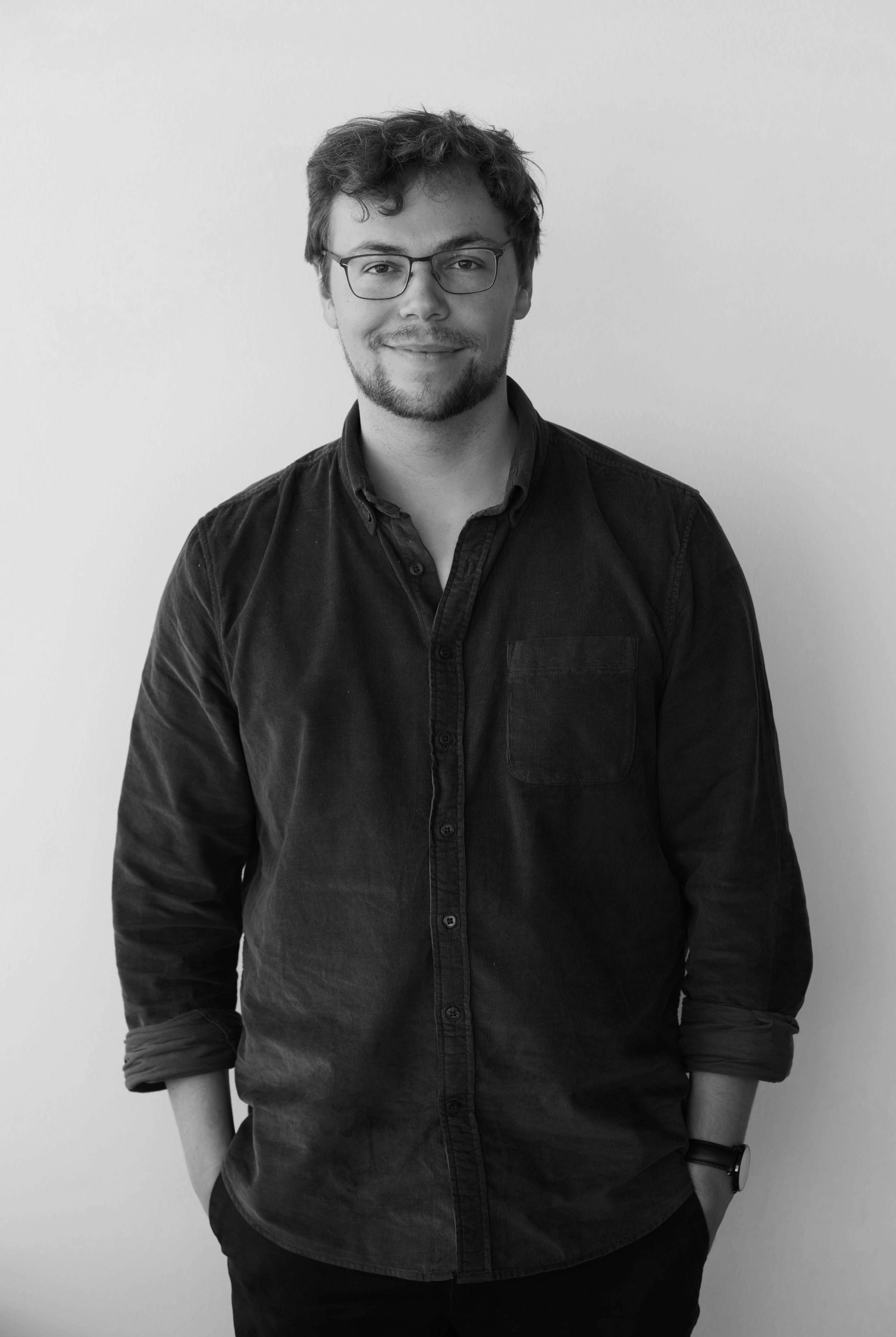
Alex Hammer is the CEO and co-founder of Dunia Innovations, a deeptech startup tackling climate challenges through AI, robotics, and advanced materials. He holds an M.Phil. in Chemistry from the University of Cambridge and a Ph.D. from the University of Glasgow, where he worked on autonomous systems for chemical discovery. Before founding Dunia, Alex held roles in management consulting and R&D digitalization at Siemens and BASF, where he bridged scientific innovation with industrial application.
Suggested Articles


